

Why We Can’t Just Turn Off Your TPMS Light

One of the most common questions we hear at CarLife Auto Repair is:
“Can’t you just turn off that tire pressure light?”
We understand the frustration.
Nobody likes seeing warning lights on their dashboard, especially when the vehicle seems to be driving perfectly fine. In many cases, the tires may even look properly inflated.
The problem is that your Tire Pressure Monitoring System (TPMS) is an important safety feature, and it isn’t something repair shops can simply disable and forget about.
What Is TPMS?
TPMS stands for Tire Pressure Monitoring System.
The system uses sensors to monitor the air pressure in your tires and alerts you when one or more tires fall below the manufacturer’s recommended pressure.
Most vehicles sold in the United States since 2008 have TPMS as standard equipment.
The goal is simple:
- Improve vehicle safety
- Reduce the risk of tire-related accidents
- Improve fuel economy
- Help drivers identify tire problems early
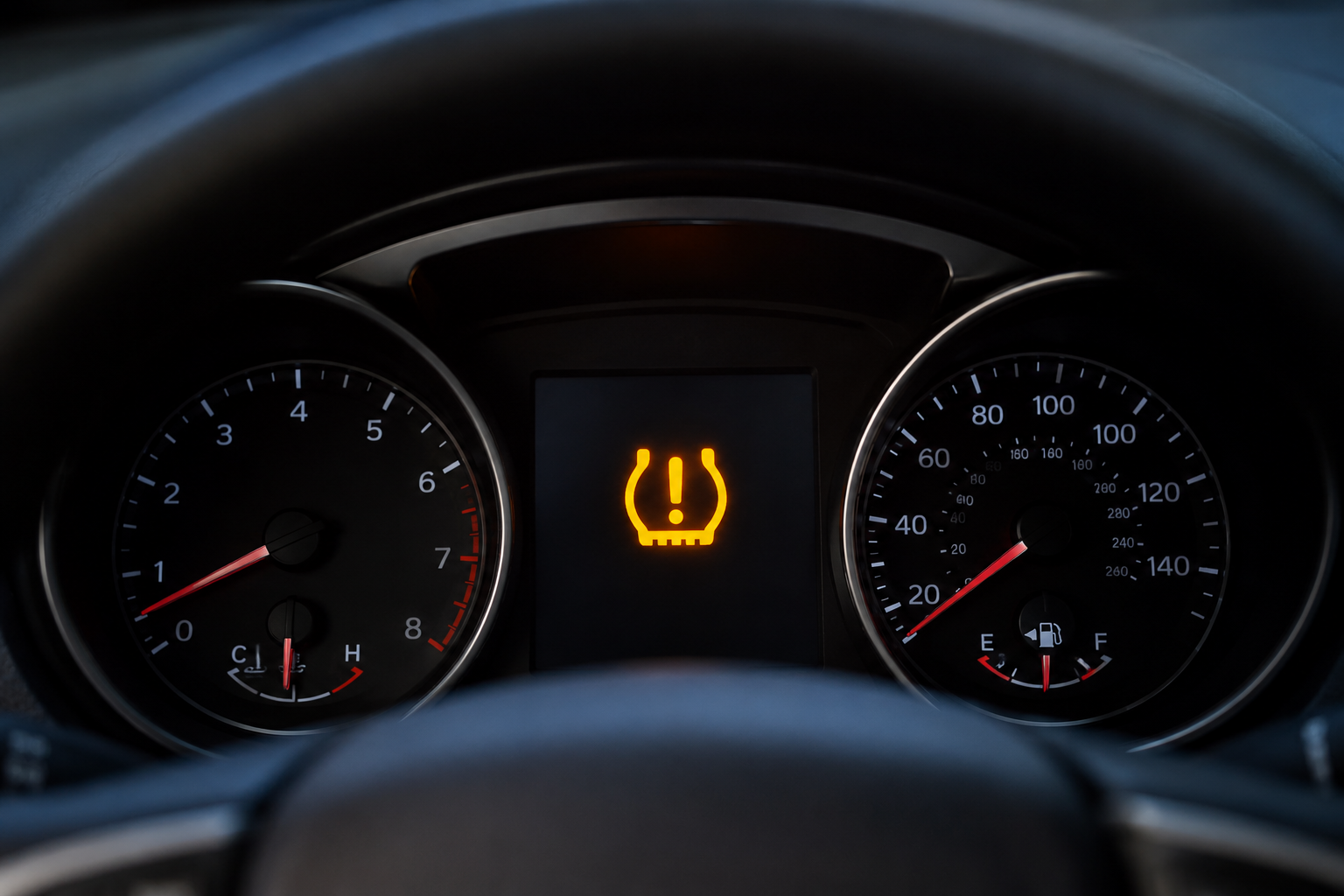
That little horseshoe-shaped light with the exclamation point in the middle may seem annoying, but it’s trying to tell you something important.
Why Tire Pressure Matters
Think about how much responsibility your tires have.
They support the entire weight of your vehicle while providing traction, braking, steering, and stability.
When tire pressure drops too low, several problems can occur:
- Increased tire wear
- Reduced fuel economy
- Poor handling
- Longer stopping distances
- Increased risk of tire failure
This becomes especially important during Arizona summers, when extreme temperatures place additional stress on tires.
Why Do TPMS Sensors Fail?
Many drivers assume the TPMS sensor is broken because someone damaged it.
Sometimes that happens.
More often, however, the sensor has simply reached the end of its lifespan.
Most TPMS sensors contain a sealed battery inside the sensor assembly.
Just like the battery in your key fob, that battery eventually wears out.
The difference is that the battery inside most TPMS sensors cannot be replaced separately. When it fails, the entire sensor typically needs to be replaced.
Most sensors last several years, but Arizona heat, road conditions, and normal wear can shorten their lifespan. Learn more about our TPMS sensor service.
Why It Often Happens During Tire Replacement
This is where misunderstandings sometimes occur.
A customer comes in for new tires and leaves with a TPMS light.
Naturally, they assume the tire shop caused the problem.
In reality, many TPMS sensors are already near the end of their life when new tires are installed.
Removing and reinstalling the tire may reveal an existing issue that was already developing.
It’s similar to replacing a light bulb and discovering the switch was failing all along. The repair didn’t create the problem — it simply exposed it.
Why Can’t We Just Turn It Off?
This is the question we hear most often.
The short answer is: because the system is designed to monitor tire safety.
Modern vehicles are engineered with integrated safety systems that communicate with multiple vehicle computers.
TPMS is one of those systems.
Disabling the warning light is generally not an available option, nor is it something professional repair facilities should attempt to bypass.
The system is designed to alert drivers when tire pressure information is unavailable or when a tire may be operating outside of safe conditions.
As frustrating as the light can be, it’s there for a reason.
The Future of Tire Monitoring
The technology behind tire monitoring continues to evolve.
Manufacturers are already developing systems that go far beyond basic air pressure monitoring.
Future tire technologies may include:
- Real-time tread depth monitoring
- Tire temperature monitoring
- Road condition detection
- Predictive maintenance alerts
- Tire sensors integrated directly into tire construction
In the future, your tires may be able to provide far more information than simply whether they need air.
The Bottom Line
A TPMS warning light can be frustrating, but it’s not something that should simply be ignored or disabled.
The system is designed to help drivers stay informed about one of the most important safety components on their vehicle.
If your TPMS light is on, the best approach is determining why it’s on rather than looking for a way to make it disappear.
At CarLife Auto Repair, we help drivers throughout Gilbert and Scottsdale diagnose TPMS issues, inspect tire conditions, and keep their vehicles operating safely year-round. You can also learn about our tire rotation and tire installation services to keep your tires in top shape.
Ready to request your next appointment with CarLife?
Please select a CarLife location below to fill out your appointment request form.
Visit our two locations in the greater Phoenix area.
Proudly servicing in Scottsdale & Gilbert.


Scottsdale
8830 E Talking Stick Way, Scottsdale, AZ, United States
Call us: (480)-270-5930
or Text Us: (480)-725-7788
Mon - Fri: 7:30 AM - 5:30 PM | Saturday - Sunday: Closed

Gilbert
4461 E Baseline Rd, Gilbert, 85234, AZ, United States
Call us: (480)-800-3171
or Text Us: (480)-725-4590
Mon - Fri: 7:30 AM - 5:30 PM | Saturday - Sunday: Closed